Lately, I’ve been reading things that are technically fine and still feel wrong.
Sometimes I know the person who supposedly wrote them. I know how they talk, how they explain an idea, and which details they normally care about. The grammar is good, the structure is tidy, but… I cannot hear that person anywhere in it.
That feeling has been building up for a while now and it is only getting worse.
Masahiro Mori’s uncanny valley describes what can happen as a robot gets closer to looking human: we respond more positively until it gets close enough that the remaining differences suddenly make it feel strange. Those realistic video game faces, you know?
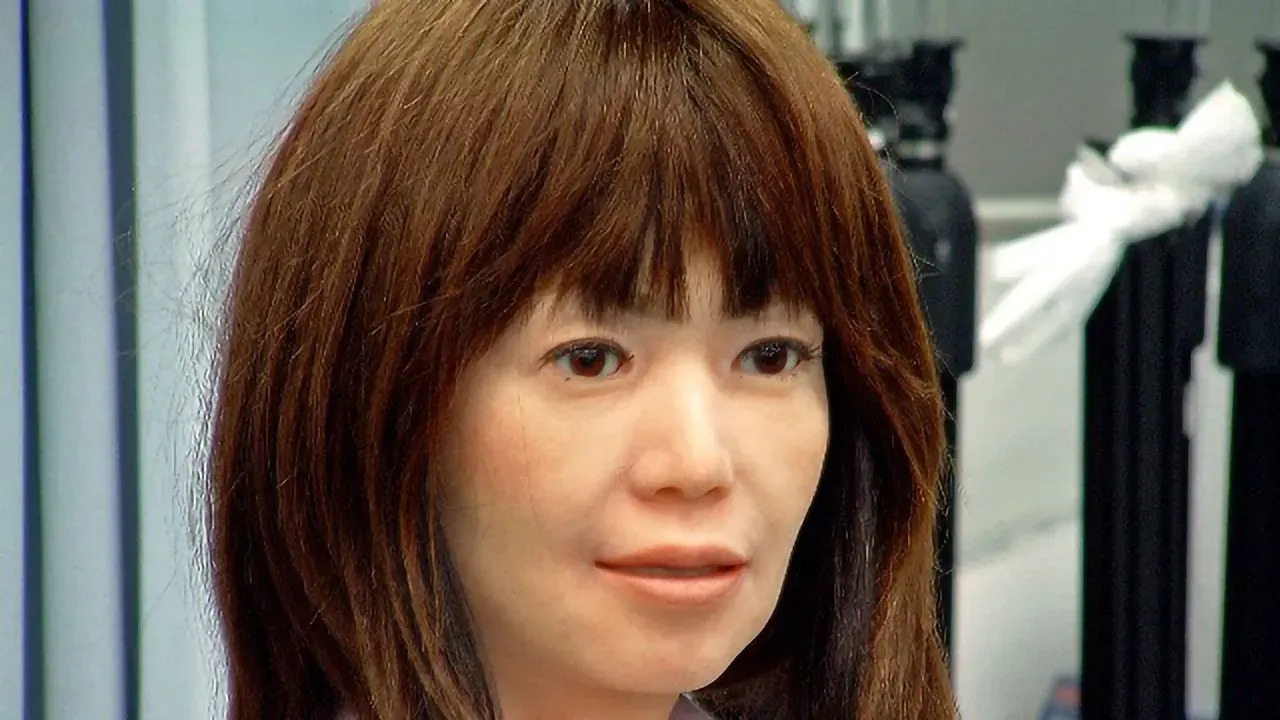
I think writing has its own uncanny valley. A generated text can get close enough to human writing that nothing is obviously wrong, yet remain far enough from a particular human that it feels weird. You may not identify the exact word or sentence causing it; you just feel that the author is not really there.
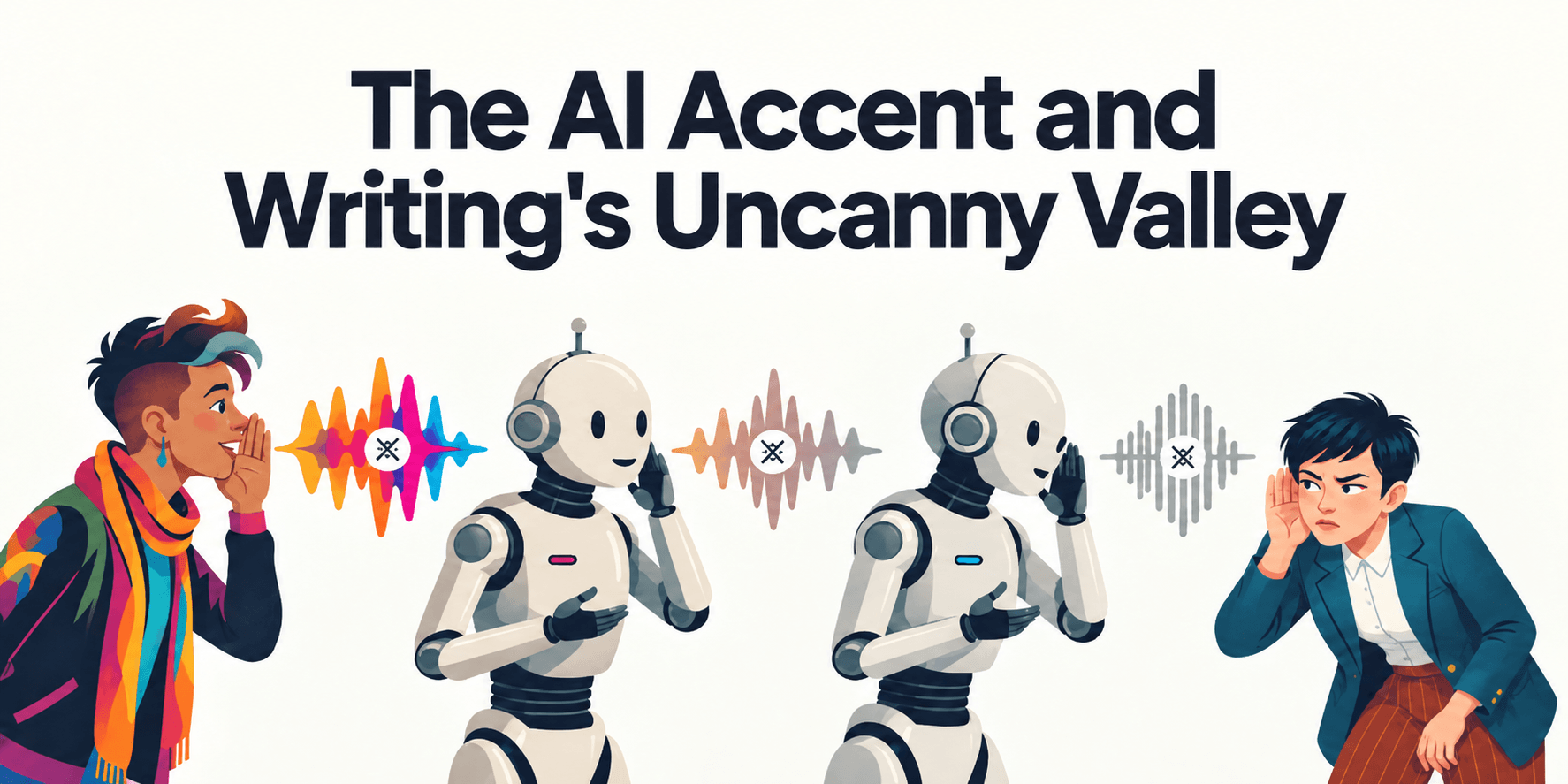
It is sort of an accent… the AI accent. The name may sound contradictory: we know everybody has an accent, but is this one that everybody is starting to share, or the absence of our own? I think it is both. AI’s recognizable default voice replaces ours, and that is what pushes writing into the valley.
The accent is more than em dashes
This is not another checklist for detecting AI writing. An em dash does not prove that ChatGPT wrote a paragraph, and neither does a heading, a particular word, or a certain sentence structure. (I love em dashes myself.)
It is the predictable opening, the familiar rhythm, the small heading for every thought, and the documentation that goes way deeper than required. It is a client-facing document written like an internal technical reference. It is a summary that somehow misses the latest conversations.
The text can be correct and polished while showing very little judgment about who will read it, what they need, and why they should care.
None of this makes AI-assisted writing fake. It just means the first draft should be exactly that: a first draft.
Does it sound like you?
I use AI to help me draft emails and blog posts, including this one. I have created skills for those tasks whose first instruction is to read my previous writing before trying to write like me.
What interests me is not simply getting a more convincing imitation. It is asking an external agent to identify patterns I had never consciously named and use those patterns to establish some foundations.
For example, AI identified that I tend to write like a developer talking directly to another person, not like a company or a documentation team: I address the reader as a peer, prefer a concrete problem before an abstract explanation, and use direct transitions, candid reactions, and the occasional exaggerated aside.
Those habits are not a magic prompt, but they are a useful mirror and a good starting point.
Previous writing cannot supply the context of the current task, though. The model still needs the audience, purpose, appropriate length, and what has changed since the last conversation; otherwise, it may reproduce a few verbal habits while missing the point completely.
Without those decisions, AI can produce more writing without improving communication. I once saw one person use AI to create a long document and another use AI to summarize it because it was too long. AI wrote, AI summarized, but did communication improve? I don’t think so.
Before you put your name on it
Good prompts make a HUGE difference, but they do not remove the need for an author.
The work is editorial, and it starts before the first draft:
- Write the prompt with the final shape in mind. Tell the model whether you need a short Slack message, a client-facing email, a decision document, or a blog post—and whether a paragraph, list, or diagram is the best format.
- Identify the opportunities beforehand. Decide what the text should accomplish: make a case, reassure a client, ask for a decision, or invite a next step.
- Describe your audience and how you approach them. Explain what they know and need, the right technical depth, and your relationship with them.
- Use no more words than the message needs. The best version is usually the shortest one that preserves the message, context, and your voice.
- Review everything. I mean EVERYTHING. Check accuracy, style, tone, rhythm, missed opportunities, and format. Is this interesting enough? If you cannot read the whole thing, your audience will not read it either.
The goal is not to “humanize” AI text until nobody can detect how it was made; it is to use AI without removing the person who has something to say. Technically correct writing is now easy to produce. Writing with experience, perspective, and judgment is not, so read every word and put your voice back into the work before you put your name on it.
I’m writing a short series about the judgment AI still requires—from how we write and share knowledge to what we build and maintain. Subscribe if you would like to read the next article.